ARCHIVE

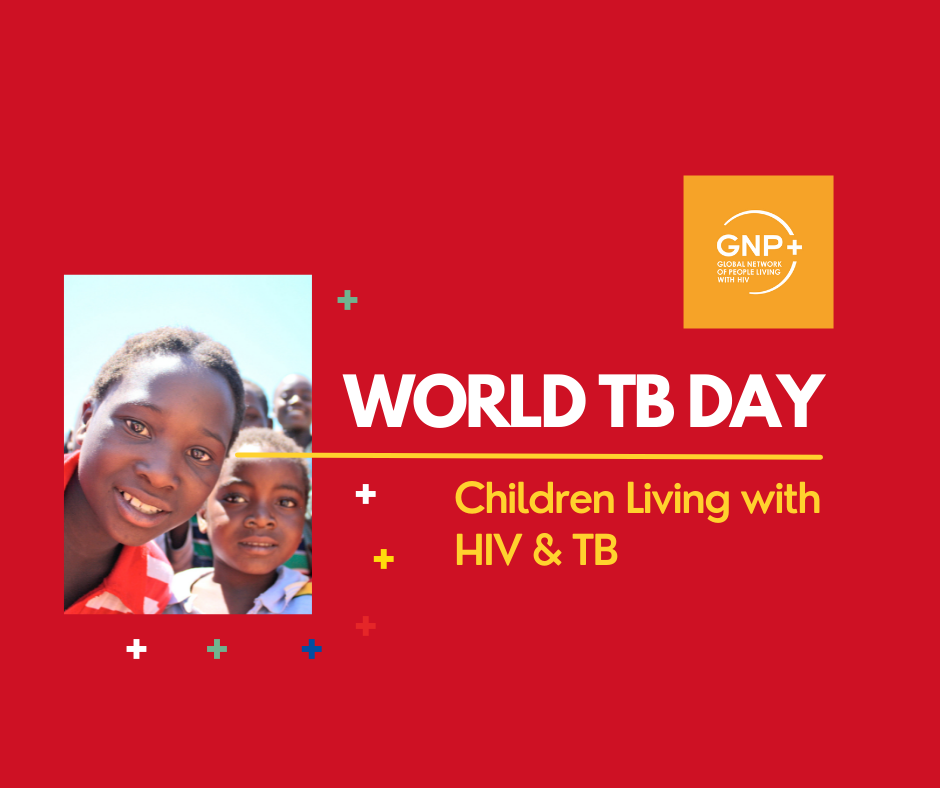
Here in Zimbabwe, I’ve seen firsthand how very difficult Tuberculosis (TB) is for children, adolescents and families, especially those living with HIV. Despite being preventable and treatable, TB remains one of the world’s deadliest infections. Each day, close to 28,000 people worldwide fall ill with this disease and over 4,000 people – including 650 children – lose their lives to it. Global efforts to combat TB have saved an estimated 66 million lives since the year 2000, but sadly, the COVID-19 pandemic has reversed years of progress. For the first time in over a decade, TB deaths increased in 2020.

Why have children in particular been so neglected in the TB response? The lack of dedicated funding for pediatric TB interventions has been highlighted repeatedly as a key barrier.

Thankfully, we’re starting to see some hopeful signs. In 2018, UN Member States committed to a global target of providing TB preventive treatment to at least 30 million people, including 4 million children aged under 5 years, who are household contacts of people diagnosed with TB. The Rome Action Plan 2020 included a dedicated focus on accelerating research and development of priority TB drugs and formulations for children living with HIV. At the UN high-level meeting on HIV and AIDS in June 2021, countries committed to ensuring that 90% of people living with HIV receive TB preventive treatment by 2025.

While this progress is welcome, many challenges remain. To address TB among children and save lives, GNP+ calls urgently for the following:

  • Create awareness within communities on pediatric TB in order to generate demand for quality childhood TB services and keep national authorities accountable for delivering them
  • Make childhood TB a priority in global, regional and national agendas and investments
  • Act on commitments made by national leaders and heads of state during high-level intergovernmental forums
  • Engage policy-makers to develop sustainable approaches to prevent and tackle child and adolescent TB
  • Ensure country availability and distribution of child-friendly formulations of TB medicines
  • Speed up integration of TB prevention, diagnosis and treatment with other health services, including those for HIV
  • Improve monitoring and evaluation of the TB response and the specific outcomes for children and adolescents
  • Better investment in social and economic support systems for households living with HIV, to ensure healthy living conditions contribute towards a more productive society

GNP+ joins WHO in calling for increased investment and research innovation to end TB in children and adolescents and adoption of the most up-to-date guidelines for pediatric TB diagnosis. This is especially critical in the context of the COVID-19 pandemic that has put progress on TB at risk.

Together, we can raise our voices to demand equitable access to pediatric TB prevention, diagnosis, treatment and care. Whether in Zimbabwe or around the world, children and adolescents deserve no less.

Written by Annah Sango
At GNP+, we are working on developing our new Strategic Plan. This plan will steer us through the next crucial few years as we emerge from the Covid-19 pandemic and its challenges, and look towards the major milestones of the Sustainable Development Goals and scaling up our efforts to end the AIDS epidemic by 2030.

With so much at stake, we want to ensure that we get this right. Our aim is to make sure that GNP+ is primed to better understand, respond and secure impact on the issues that matter most to people living with HIV. We also want to use the coming years to strengthen our movement and build strong, sustainable partnerships to meet future challenges and ensure that no one is left behind in the HIV response. 

There is still so much to be done and we need your help in determining how we approach the coming strategic period. We are therefore seeking insights and feedback from valued partners across the HIV sector and beyond through a survey which you can find below. 

We would be hugely grateful if you would be able to participate and share your thoughts with us. It will take you approximately 15 mins to complete. 

Thank you for taking part. Your views are important to us and will help shape the future of GNP+.

Survey ends 1 April 2022.

Take our survey – here they are in different languages:

On this International Women’s Day, we join peers, colleagues and partners to celebrate the incredible achievements of women all over the world in ensuring access to HIV prevention and treatment, including Sexual Reproductive Health and Rights (SRHR) services.

The road towards a sustainable tomorrow is held by this foundation based on women’s fearless, resilient mobilising and action worldwide. As young feminist activists, we acknowledge the incredible role that the women in our diversity continue to play to promote gender justice and ensure women and girls’ rights remain on the agenda at global and national levels. Although some progress has been recorded in recent decades, an ultra-conservative robust backlash threatens bodily and sexual autonomy, decision-making power, and the dignity and safety of women, girls, and other sexual minorities. COVID-19 has exacerbated gender inequalities, imposing financial hardship, especially on women. Additionally, blind spots to the specific challenges endured by women who faced multiple forms of discrimination – such as women who inject drugs and engage in sex work, and LBQ young women – continue to reproduce gender inequalities within the HIV response, undermining efforts to end HIV / AIDS. 

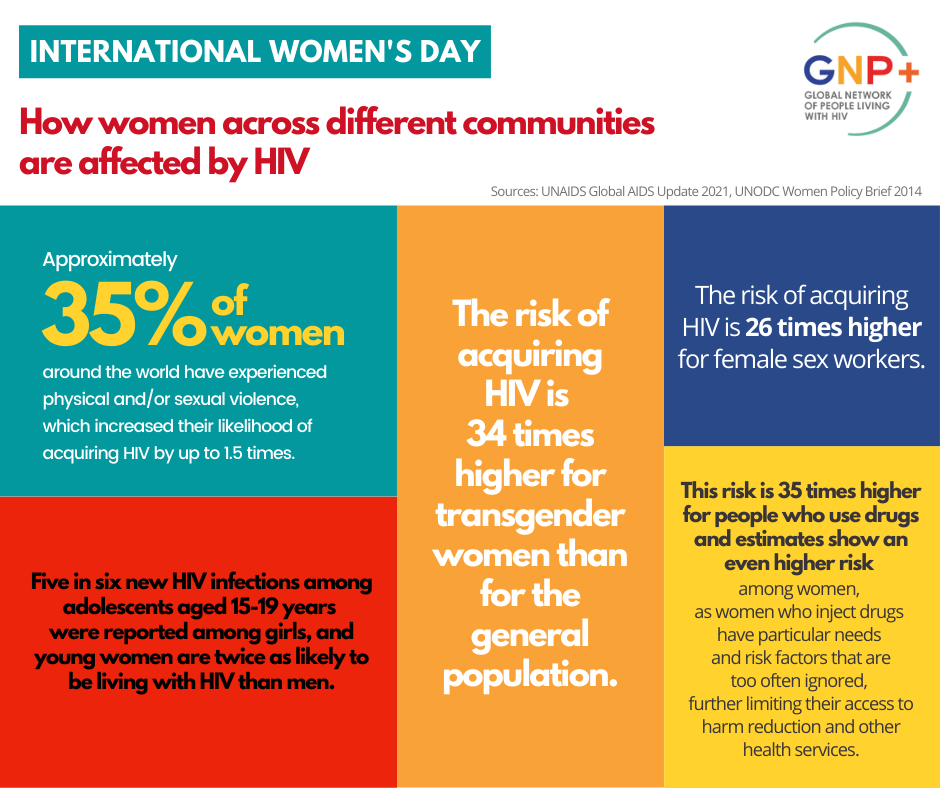
Women and girls, particularly women from key-populations (female sex workers, women who use drugs and transgender women, LBQ women) continue to be marginalised and most impacted by HIV[1]. Conservative social norms and patriarchal perceptions on gender roles often disempower women and girls, preventing them from making autonomous and well-informed decisions about their sexual lives and health, putting them at higher risk of acquiring HIV. 40 years into the HIV epidemic, AIDS is still the leading cause of death of women of reproductive age[2]. Ensuring access to SRHR services is critical to promote gender equality and empower women and girls to lead healthy lives, challenge harmful power relations and open doors to opportunities.

Laws and policies also drive how people living with and affected by HIV are treated, how health systems are structured, and how government officials and health care agents engage with communities. Across the world, 64 countries still criminalise people based on their sexual orientation and 14 countries criminalise people based on gender identities; 92 countries have laws that criminalise HIV transmission, exposure or non-disclosure, and many countries with age of consent laws deny HIV prevention services to young women.

How women across different communities are affected by HIV.

Most countries criminalise sex work and drug possession and/or use. These punitive laws fuel stigma and discrimination and create an unfavourable environment that makes women living with HIV, sex workers, women who use drugs, transgender, lesbian, bisexual and queer women face challenging barriers to access essential and life-saving health services for fear of judgment, eviction, getting a criminal record, incarceration, deportation, loss of rights to care for their children, and loss of inheritance rights.

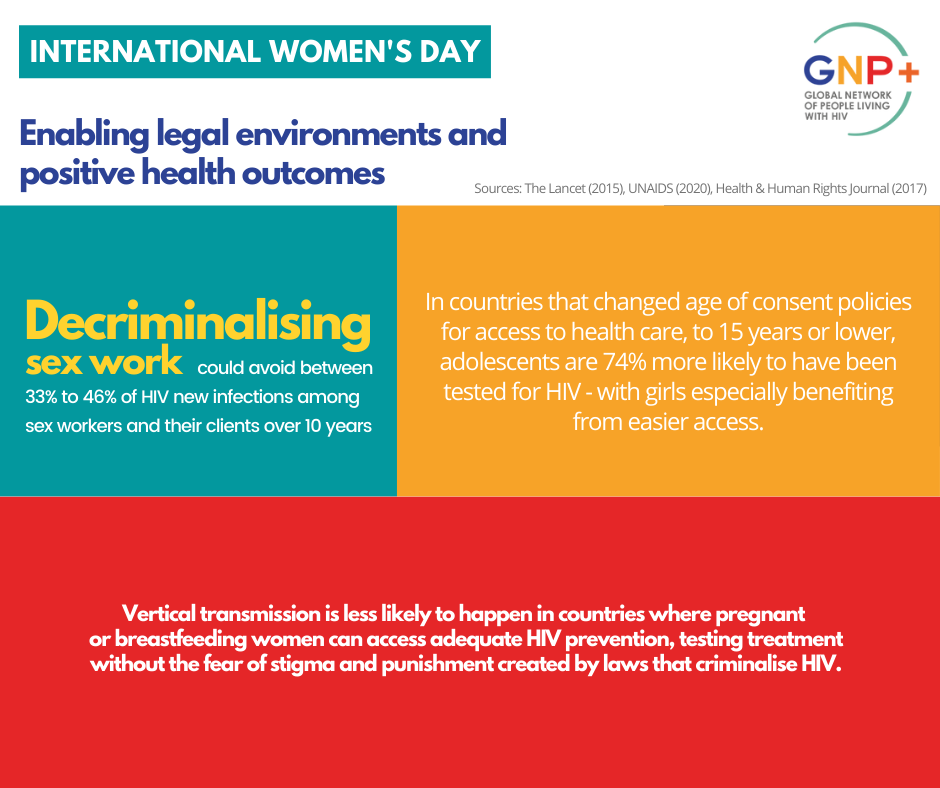
Enabling legal environments and positive health outcomes.

Data from HIV Policy Lab show the significance of supportive legal and structural environments in realising HIV goals and targets, especially among women and girls. Evidence shows more progress in national HIV programmes in countries with clear laws promoting non-discrimination, human rights and robust gender-based violence responses. In 2021, during the UN HLM on HIV/AIDS, UN member States committed to creating such a supportive legal and structural environment to address the inequalities faced by people living with HIV, key populations and women and girls in the HIV response. By 2025, countries that adopted the HLM Political Declaration must reduce by 10% or less the proportion of:

➔ Women, girls, people living with, at risk of and affected by HIV who experience gender-based inequalities and sexual and gender-based violence

➔ Countries with restrictive legal and policy frameworks that lead to the denial or limitation of access to service

➔  People experiencing all forms of HIV-related stigma and discrimination 

Now is the time to bring these commitments that impact women and girls into action! We urge governments, donors and implementing partners to:

  1. Urge attention and efforts that result in the decriminalisation of individuals based on HIV transmission, engagement in sex work, drug use or possession, or same-sex relationships so that women and girls can enjoy their inherent rights to health, including HIV and SRHR.
  2. Resource women-led interventions, including advocacy actions that hold governments and stakeholders accountable to global commitments on gender equality.   

It is time for all of us to end biases that fuel marginalisation and inequality, hampering women’s access to HIV and SRHR services. It is the right thing to do to realise the global commitments to end AIDS by 2030.

[1] See the 2021 Global Aids Update as a PDF

[2] Read the press release We’ve got the Power

Written by: Aline Fantinatti, Florence Anam, Tambudzai Magwenzi and Bruna Martinez.

Secret Link